Rooted in Research: Bringing Reading Research to the Classroom
"I know I should use research-based practices, but I don't have time to read the research or figure out how to implement it."
Every educator has heard the phrase "research-based instruction." The challenge isn't believing the research; it's finding the time to read it, understand it, and translate it into practical classroom routines.
That's why we created Rooted in Research Guides.
Each guide takes a high-impact literacy practice supported by reading research and turns it into something teachers can actually use tomorrow. You'll get:
✓ A simple explanation of the strategy, routine, or practice
✓ Key research findings
✓ Practical implementation steps
✓ Classroom-ready tools and templates
✓ Links to additional learning resources
No academic jargon. No 40-page research papers. Just effective practices you can immediately apply in your classroom.
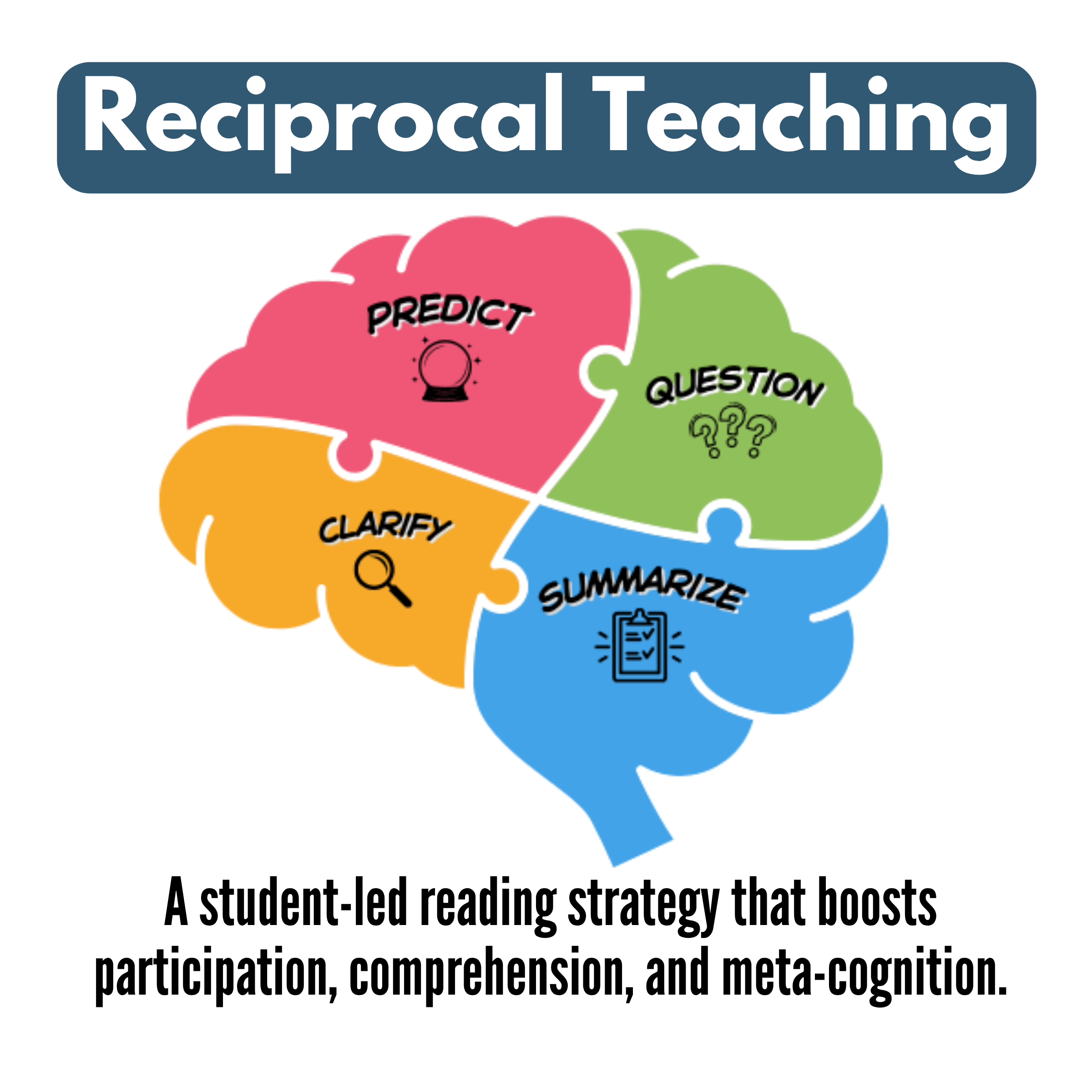
Reciprocal Teaching: The Fab Four of Comprehension
Reciprocal Teaching helps students become active readers through four comprehension strategies:
Predict
Question
Clarify
Summarize
Students gradually take ownership of these strategies through structured discussion, transforming comprehension from a passive activity into an active thinking process.
Why teachers love it:
Reciprocal Teaching improves comprehension, increases student engagement, and helps students monitor their own understanding while reading.
You'll learn how to:
Introduce the Fab Four strategies
Structure student discussions
Use sentence stems to deepen thinking
Build student independence over time
Download the Reciprocal Teaching Rooted in Research Guide → HERE. 🧡
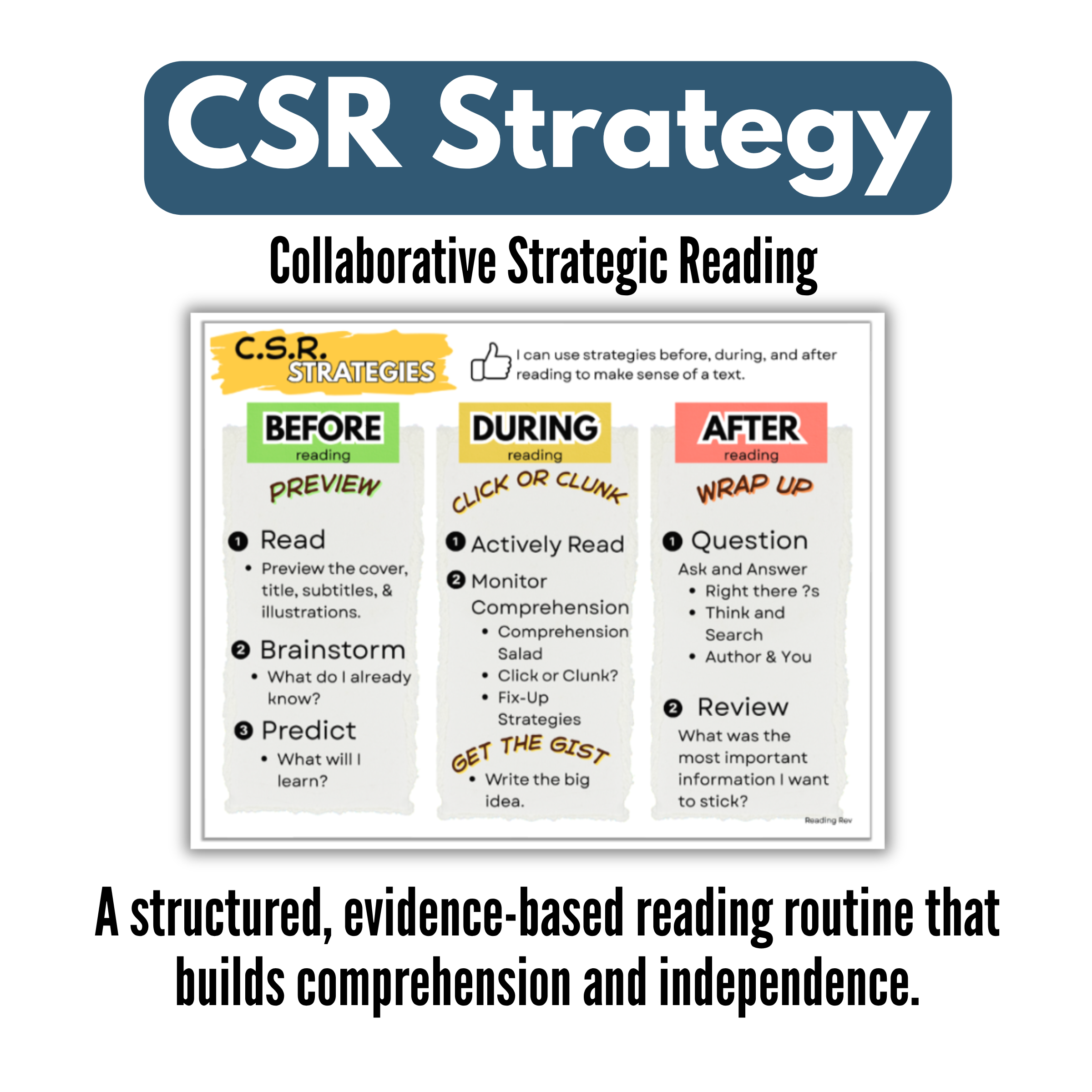
Collaborative Strategic Reading (CSR)
Collaborative Strategic Reading combines explicit comprehension instruction with structured peer collaboration. Students learn to:
Preview
Click & Clunk
Get the Gist
Wrap Up
These routines help students monitor comprehension, clarify vocabulary, summarize important ideas, and engage in meaningful discussion.
Why teachers love it:
CSR provides a clear routine that supports struggling readers, multilingual learners, and students tackling increasingly complex texts.
You'll learn how to:
Teach each CSR strategy explicitly
Use comprehension monitoring routines
Build vocabulary and self-monitoring skills
Facilitate productive collaborative learning
Download the CSR Rooted in Research Guide → HERE. 🧡
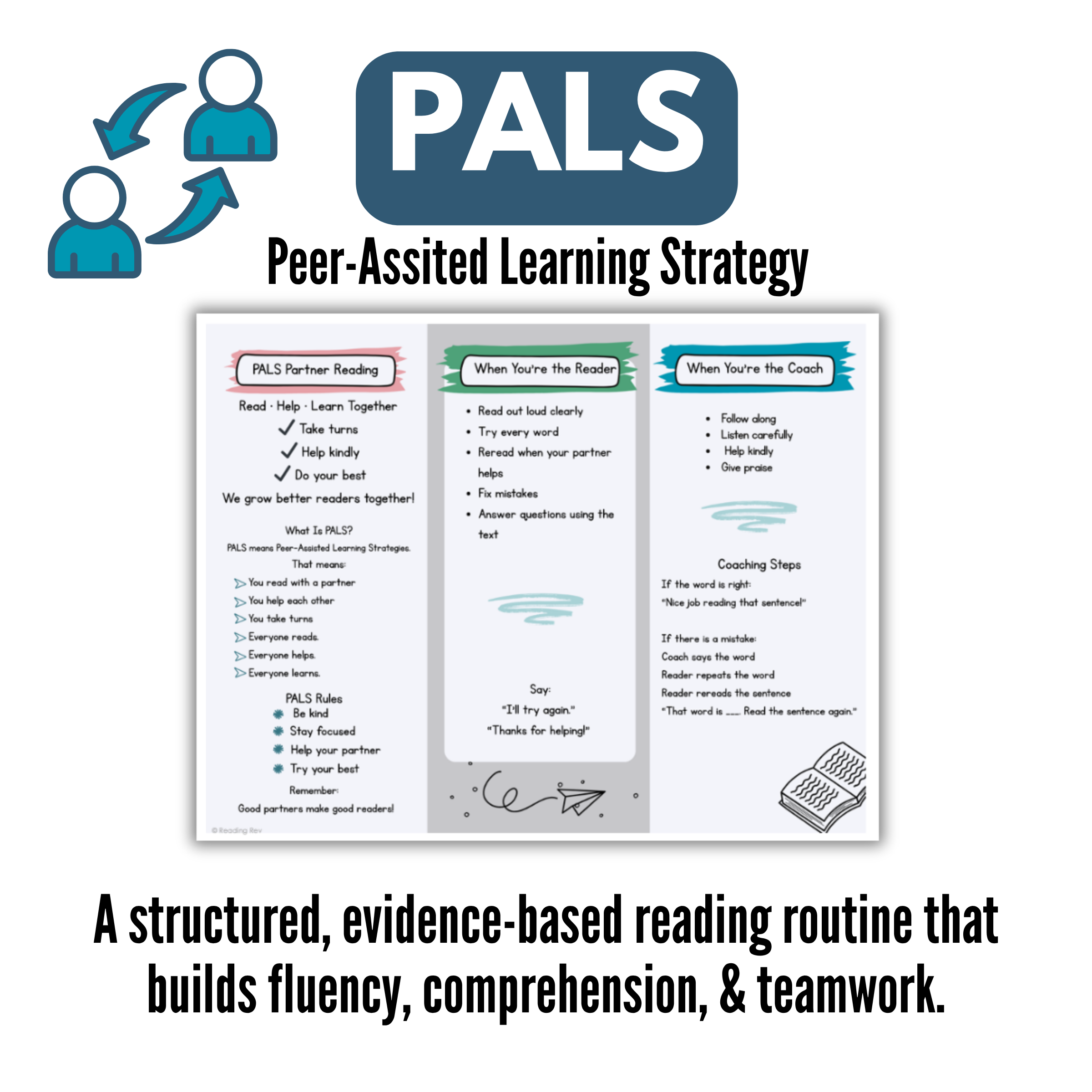
Peer-Assisted Learning Strategies (PALS)
Peer-Assisted Learning Strategies (PALS) was developed by Lynn and Douglas Fuchs at Vanderbilt University. Their research demonstrated that structured peer tutoring can improve reading fluency, comprehension, and academic confidence for a wide range of learners.
What it is:
PALS is a structured partner-reading framework that combines fluency practice, comprehension work, peer coaching, and immediate feedback. Students alternate roles as Reader and Coach while practicing reading skills.
Why teachers love it:
Every student stays actively engaged. Readers receive immediate corrective feedback, while coaches strengthen their own understanding by teaching and supporting peers.
You'll learn how to:
Create effective reading partnerships
Teach coaching routines
Improve fluency and comprehension simultaneously
Build accountability and engagement
Download the PALS Rooted in Research Guide → HERE. 🧡
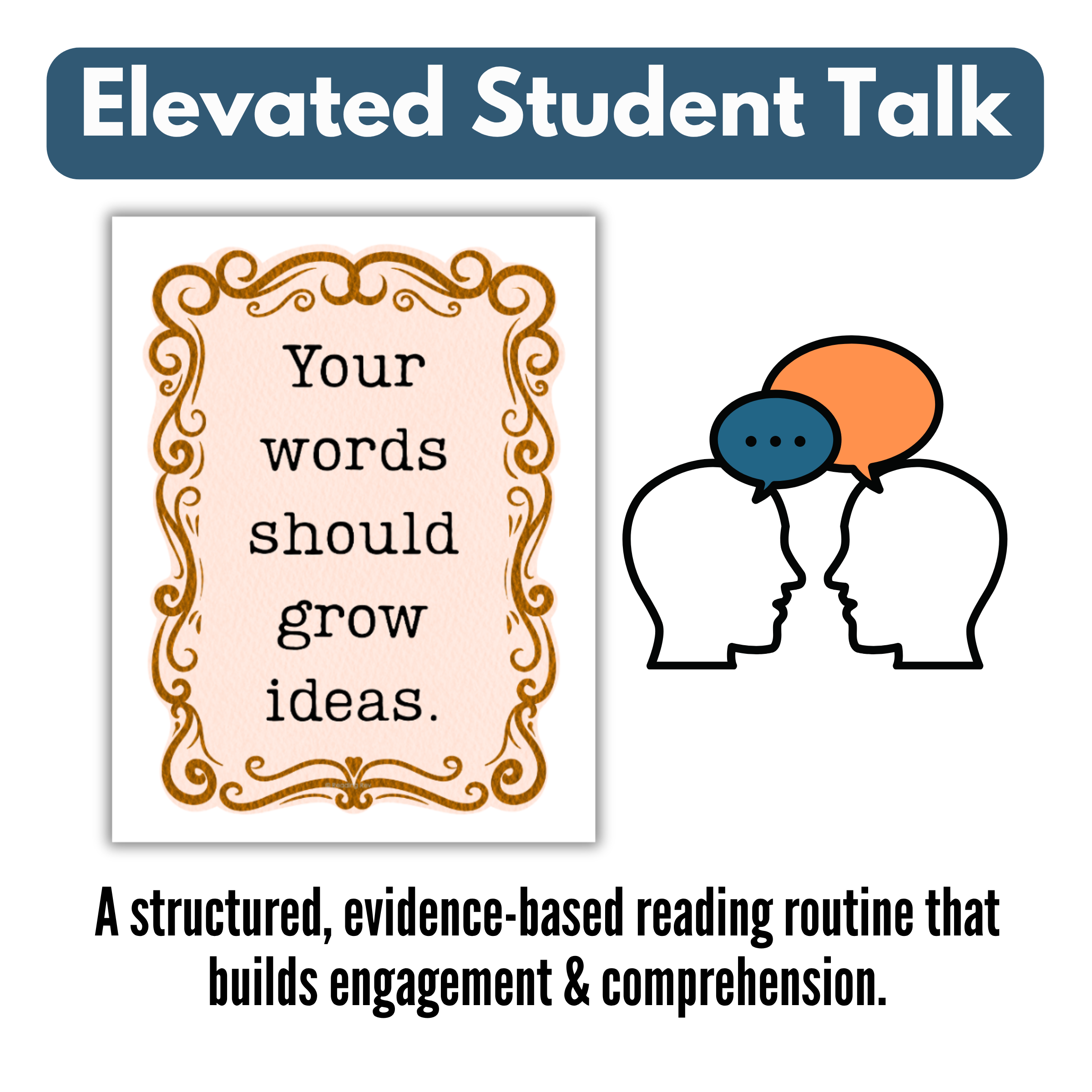
Elevated Academic Talk
What it is:
Most classrooms use Turn & Talk. Few classrooms teach students how to engage in meaningful academic conversation.
This guide transforms simple partner discussions into structured academic discourse using a research-based framework:
Think → Speak → Listen → Respond
Why teachers love it:
Students learn to explain their thinking, listen actively, build on ideas, and engage in higher-level discussions.
You'll learn how to:
Upgrade traditional Turn & Talk
Increase participation and accountability
Improve student reasoning and discussion skills
Use conversation stems and rigorous prompts
Download the Elevated Academic Talk Guide → HERE 🧡
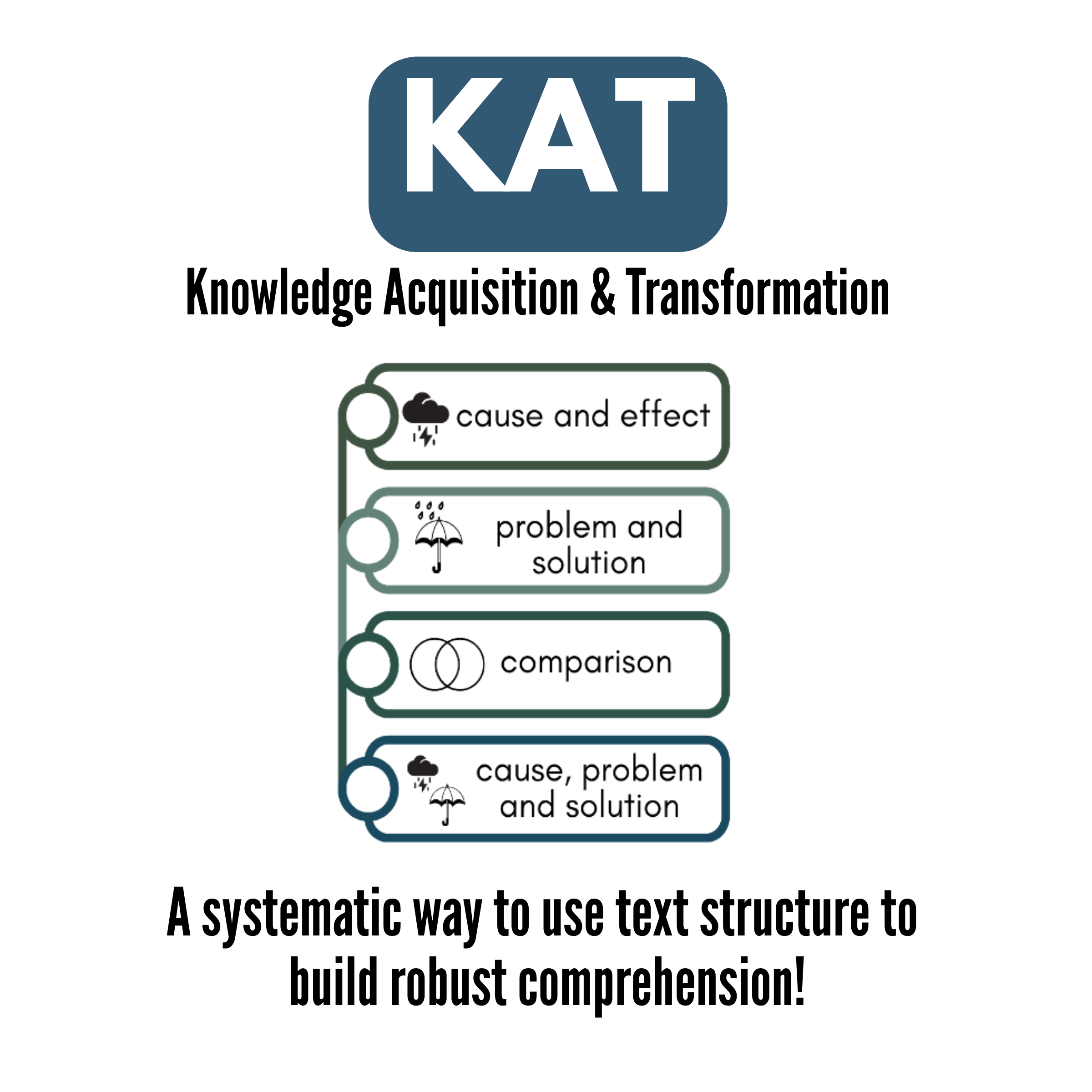
Knowledge Acquisition & Transformation (KAT)
KAT, inspired by the work of Dr. Kay Wijekumar and colleagues, teaches students to use text structure as a pathway to deeper comprehension.
Students learn to:
Acquire important information
Organize information using text structures
Transform information into main ideas and summaries
Rather than simply answering comprehension questions, students learn how ideas connect and how authors organize information.
Why teachers love it:
KAT systematically develops three foundational comprehension skills:
Main idea
Summary
Inference
It works across content areas and helps students build lasting understanding rather than completing isolated comprehension tasks.
You'll learn how to:
Teach text structures explicitly
Guide students toward stronger summaries
Build deeper comprehension and retention
Move beyond worksheet-based comprehension instruction
Download the KAT Rooted in Research Guide → HERE. 🧡
Why We Created Rooted in Research
Teachers shouldn't have to choose between teaching and spending hours digging through academic journals.
The mission of Rooted in Research is simple: We do the research. You get the implementation.
Every guide takes a proven literacy practice and turns it into practical, classroom-ready instruction so you can spend less time searching and more time helping students become stronger readers.
Ready to bring research to your classroom? Explore the full Rooted in Research collection and start implementing evidence-based literacy practices tomorrow. Find them all in Reading Rev’s VIP VAULT.