Sight Words, High-Frequency Words, and Irregular Words: What's the Difference?
I remember my daughter, who was later diagnosed with dyslexia, coming home from kindergarten and first grade with stacks and stacks of “sight words” to memorize. Each stack was color-coded by level. Once you mastered one stack, you moved on to the next…a brand-new color and a brand-new list of words.
We practiced those words over and over, hoping they would eventually stick. Some did. Many didn't. Meanwhile, her friends kept moving on to new colors, and my daughter's anxiety and frustration grew.
As her mom, I was frustrated, too. We were putting in the work, but it wasn't working, and I didn’t know why! What I didn't fully understand then, but know now, is that memorizing whole words isn't the same as learning how to decode them.
Too many years later, I began to understand just how much confusion surrounds the terms sight words, high-frequency words, and irregular words. They're often used interchangeably, but they mean very different things!
We spend time clearing up this confusion in our professional development courses, but I think it's time we bring that conversation here, too!
1- High-Frequency Words: It's About HOW OFTEN
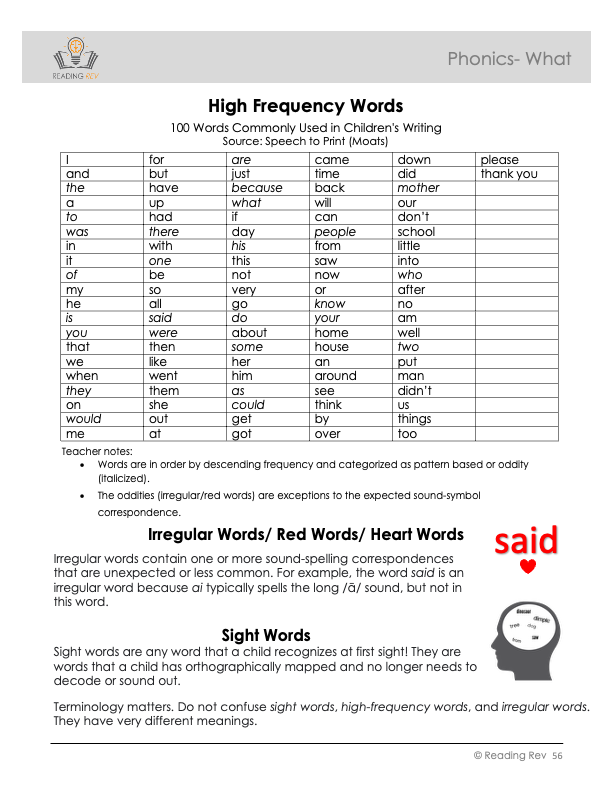
High-frequency words are simply words that appear frequently in written language. Words like the, and, is, said, and can are all high-frequency words.
Here's what's important:
some high-frequency words are decodable because they follow predictable sound-symbol correspondence patterns (in, back, came),
others contain unexpected pronunciation or spellings (said, was, one).
Lists like Louisa Moat’s 100 Words Commonly Used in Children’s Writing identify commonly occurring words, but it’s important that we know how to teach them.
That's where understanding phonics, morphology, and etymology comes in.
2- Irregular Words: It's About SPELLING
Irregular words contain one or more sound-spelling correspondences that are unexpected or less common.
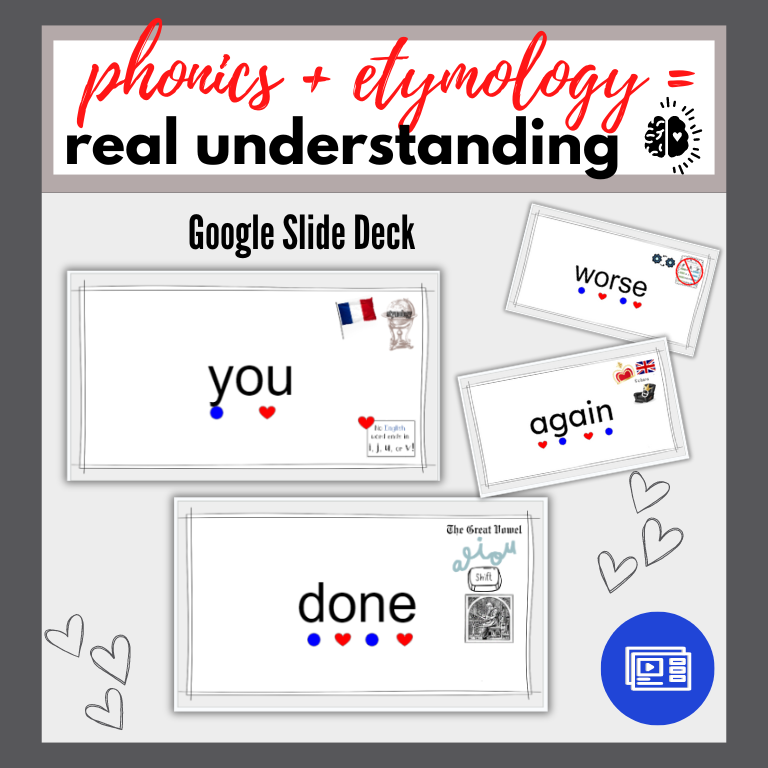
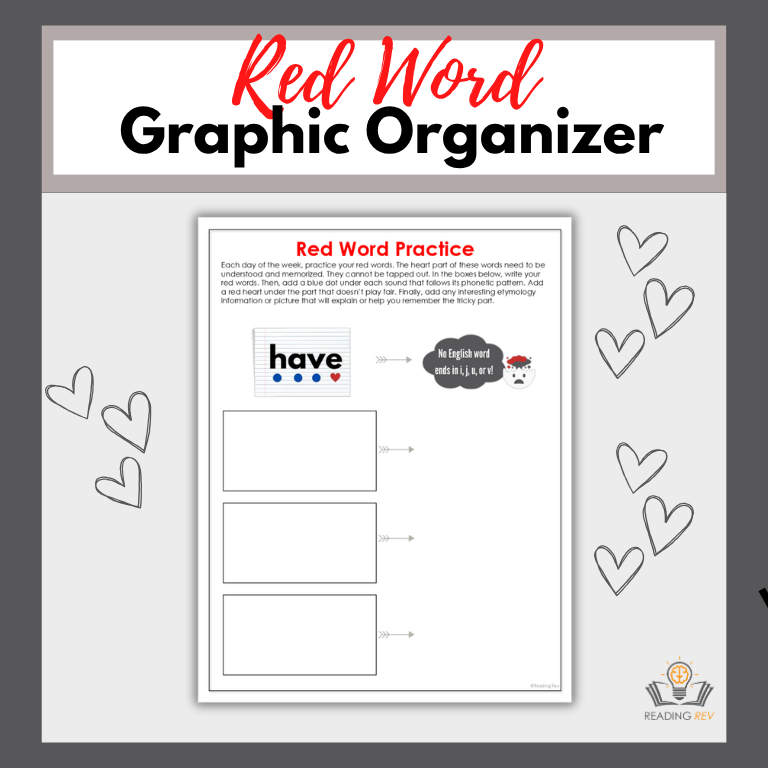
For example, in the word said, the letters ai represent the short /ĕ/ sound rather than the expected long /ā/ sound. These words are called different names in different programs: Red Words, Heart Words, Tricky Words.
However, irregular doesn't mean unexplainable!
Many seemingly irregular spellings make much more sense when we explore word origins (etymology), spelling conventions, and the history of English.
Rather than asking students to memorize the entire word as a visual unit, we can explicitly teach the predictable parts, identify the unexpected spelling, and explain WHY it exists whenever possible.
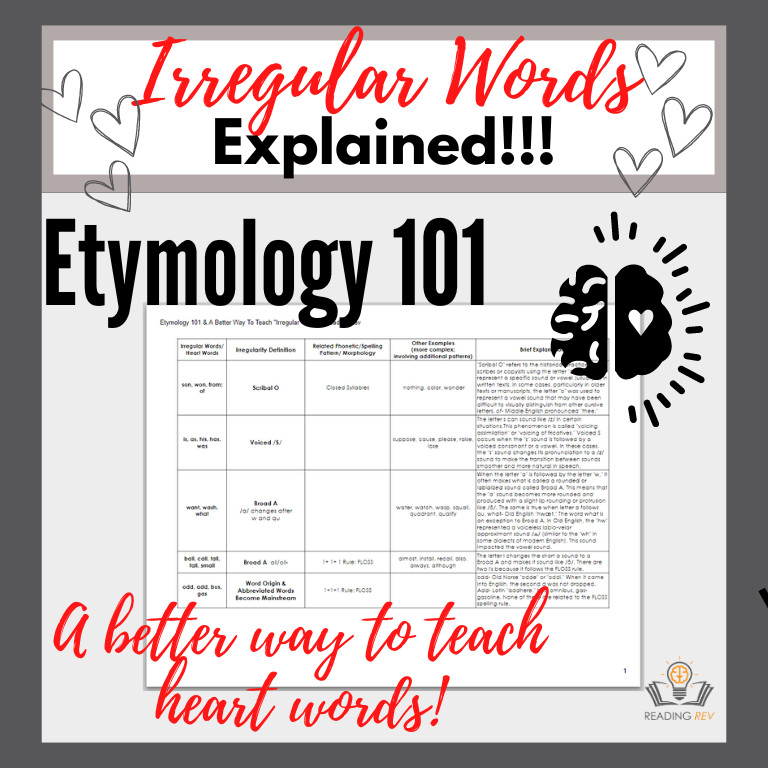
We've spent years exploring this strategy! In fact, this is how we teach irregular words in the Reading Rev Phonics, Spelling, & Morphology Program. Read our blog, Etymology 101: A Better Way to Teach Irregular Words, to learn more about connecting spelling to word origins. We even have an entire video series dedicated to this!

3- Sight Words: It's About AUTOMATIC RECOGNITION
This is the term that causes the most confusion!
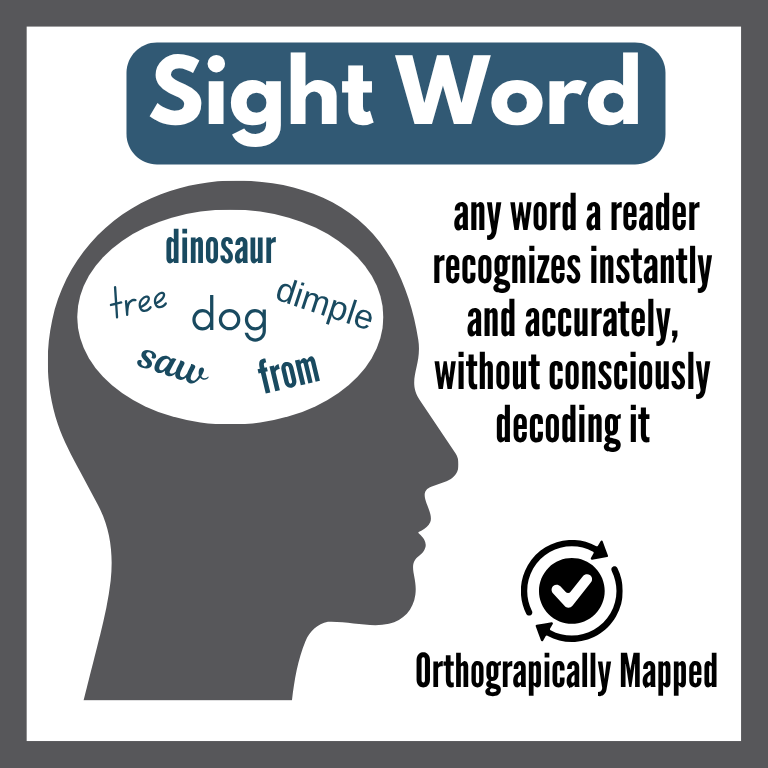
A sight word is any word a reader recognizes instantly and accurately, without consciously sounding it out.
Sight words aren't a special category of words to memorize. They're words that have become familiar through learning and practice. This is called orthographic mapping. Through orthographic mapping, students connect the sounds in spoken words to their written spellings, allowing words to become stored in long-term memory for automatic recognition.
For a beginning reader, a simple word like cat may quickly become a sight word through decoding and repeated exposure. But even a first grader might instantly recognize a more complex word like dinosaur because they've encountered it frequently and connected to its meaning.
Recognizing a word automatically doesn't necessarily mean a student can decode it independently. As teachers, we need to distinguish between words students can accurately decode using their phonics knowledge and words they recognize because they've already become familiar.
So, What Does This Mean for Instruction?
First, do NOT hand a students a stack of words to memorize. Instead, ask these questions when teaching a new word or pattern.
Is the word decodable? Explicitly teach students phonics patterns and help them apply those patterns when they come to a new, unknown word.
Does the word contain an irregular spelling? Map the sounds to letters, explicitly teach the unexpected/irregular part, and explore the reason behind it when appropriate. Teach sets of words that follow the same irregular pattern together!
Does the student recognize the word automatically? If not, provide additional decoding, spelling, and meaningful practice to build automatic recognition and orthographic mapping.
A word can be high-frequency, irregular, and a sight word for a particular reader. These terms aren't mutually exclusive!
More Resources
The International Dyslexia Association (IDA) provides helpful guidance on this terminology and its implications for instruction. They recently released a new fact sheet titled, Sight Words- What They Are and Why They Are Important
Looking for a systematic way to teach phonics, spelling (regular and irregular), and morphology? The Reading Rev Phonics, Spelling, & Morphology Program helps students understand how words work through explicit, structured instruction. I guess we should add etymology to the title as well!
You may also purchase the Etymology, a Better Way to Teach Irregular Words as a stand-alone resource.
Our goal isn't to teach students to memorize words. It's to teach them how words and language work so they can become accurate, automatic, confident readers.