How the Hedgehog Concept Can Transform Literacy Outcomes in Schools
Schools don’t struggle with literacy outcomes because educators don’t care or work hard enough.
They struggle because there are too many priorities competing for attention. Initiatives stack. Expectations shift. New programs get added without implementation support.
The result?
Teachers are overwhelmed and impact is inconsistent.
This is why the Hedgehog Concept matters.
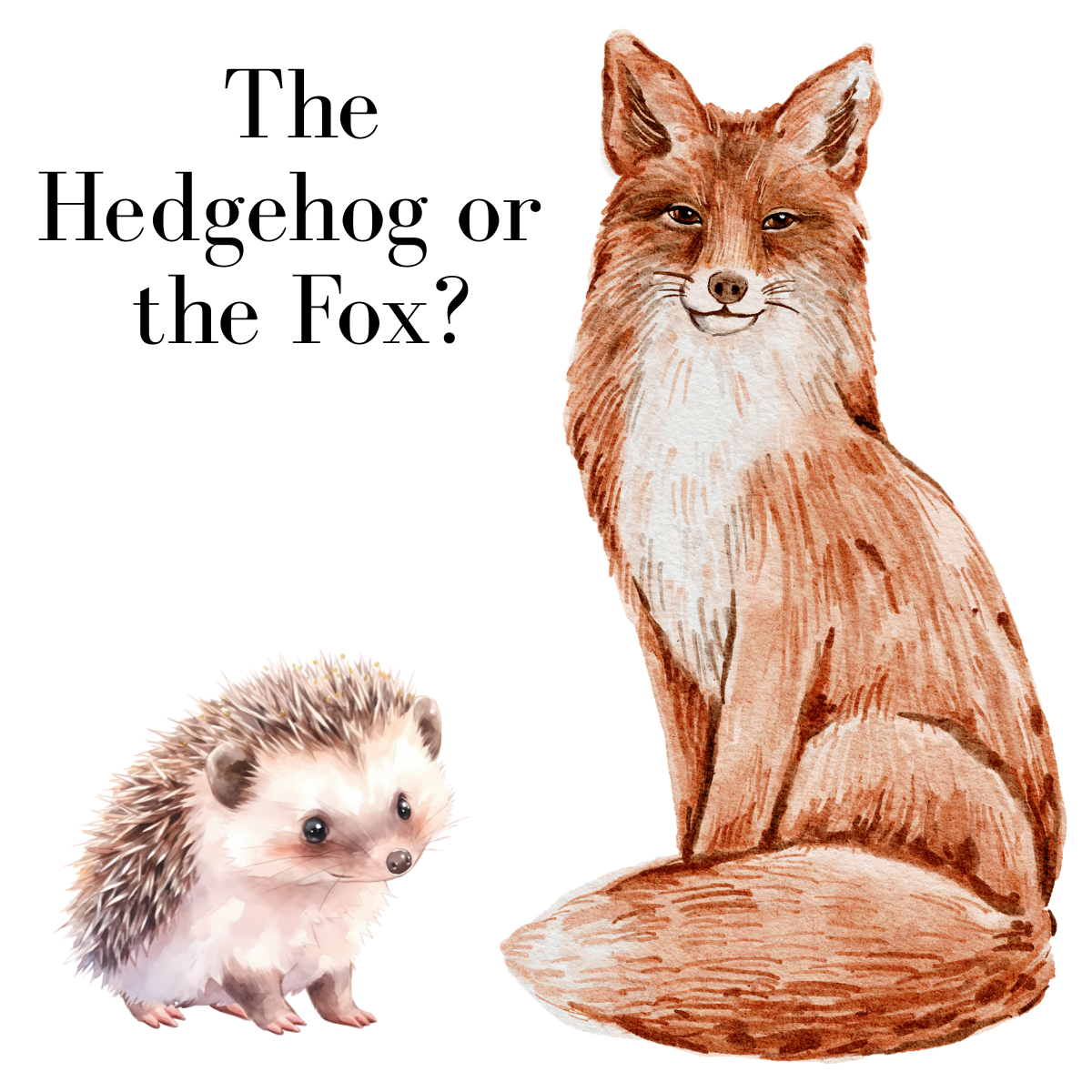
Would you rather be a hedgehog or a fox?
This idea comes from an ancient Greek poet Archilochus who said,“The fox knows many things, but the hedgehog knows one big thing.”
This short parable tells the tale of a fox that is clever, adaptable, and knows lots of strategies. It tries many different approaches. The hedgehog, on the other hand, is simple and focused. It does one thing extremely well…when threatened, it curls into a ball of spikes.
Over time, the fox keeps trying new ways to attack…
and the hedgehog keeps doing the same thing and survives.
The message is about focus vs. complexity. The fox is scattered, reactive, and constantly changing strategies, while the hedgehog is disciplined, consistent, and grounded in one core principle
Start With Simplicity.
This idea was later expanded in an essay by Isaiah Berlin and then applied to organizations in Good to Great by Jim Collins. The Hedgehog Concept, popularized by Collins, is built on one idea:
Discern what is essential, and make it your single unifying focus.
Not ten priorities.
Not a long improvement plan.
One clear focus that drives every single decision.
An incredible school I’m working with is bringing the Hedgehog Concept to life through three simple, aligned ideas:
1. What are we deeply passionate about?
All students can be proficient readers
This is our essential belief, and it matters. If we don’t believe all students can get there, our actions won’t align.
2. What drives our success?
Strong Tier 1, structured literacy instruction
This is the engine and our level for change. Not fancy programs. Not differentiating to death. A solid focus on the what we are teaching and how we are teaching all students.
3. What do we want to be the best at?
Growing capable, confident readers
We want to be the best at getting all students to be capable, confident readers.
Not just to those who reading comes easy. Not just to compliant readers. Not just test-passers. Not just to those who love to read. All readers. We won’t stop until we do.
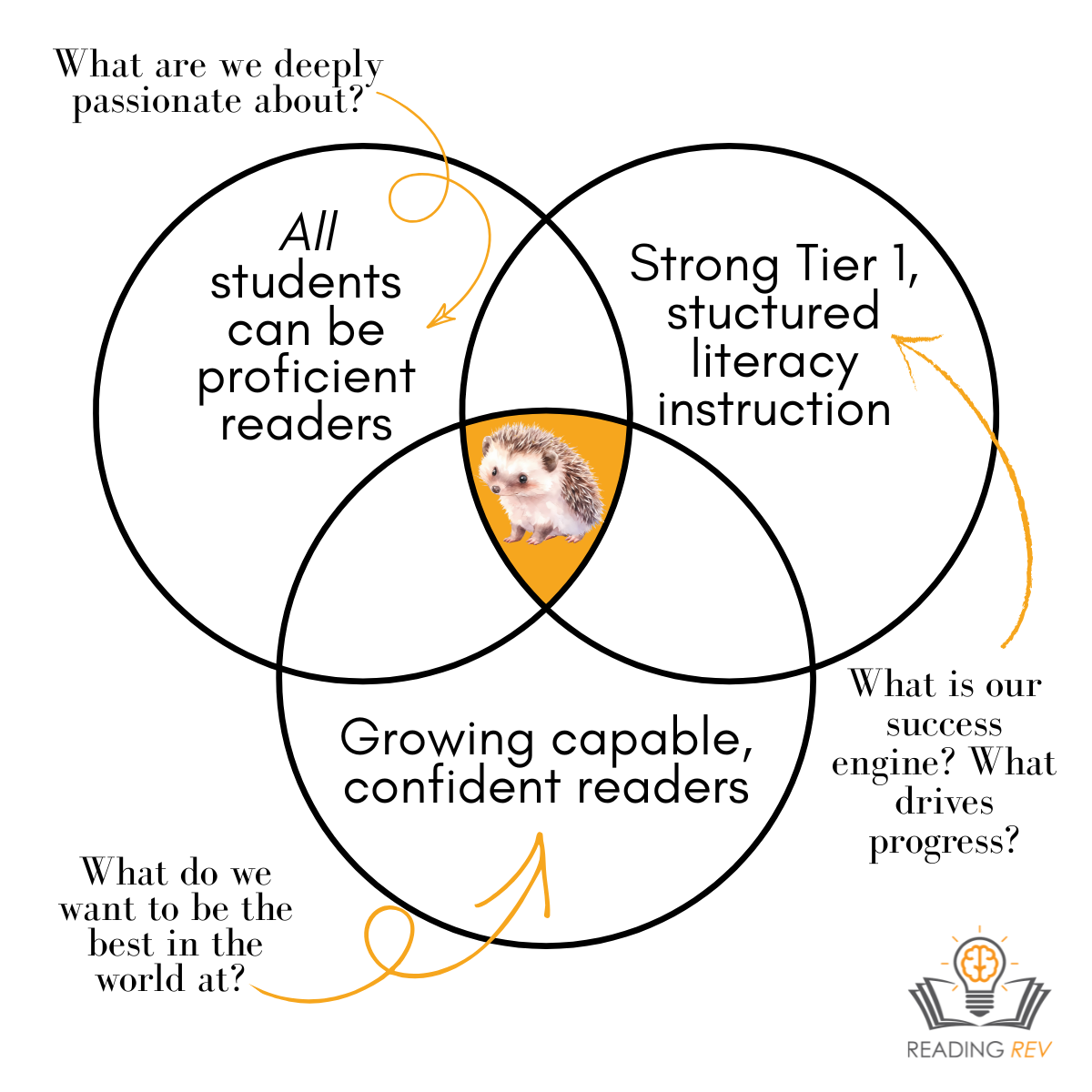
The Intersection: Your Hedgehog
Where these three overlap is your focus:
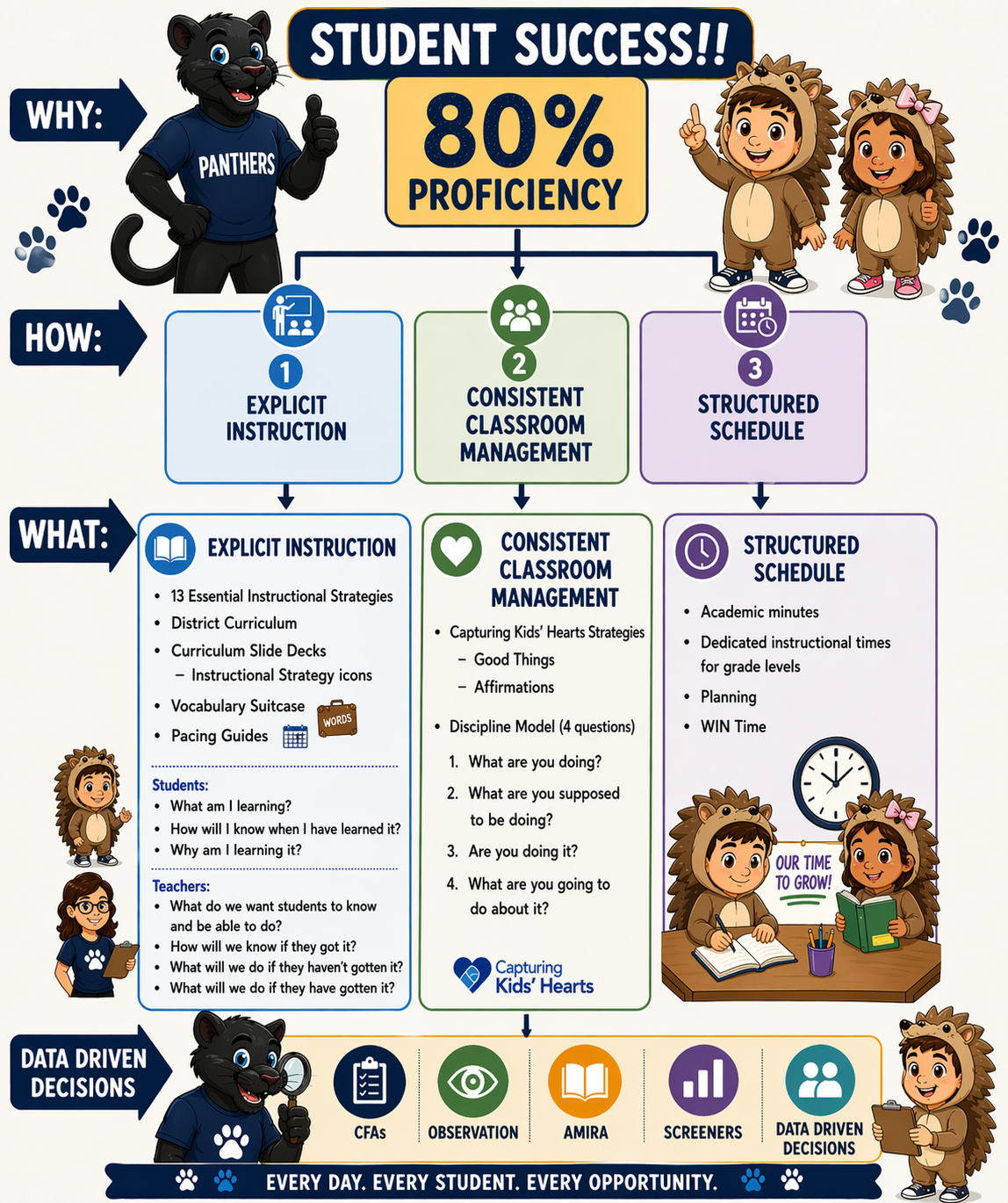
At least 80% of students will be proficient through strong Tier 1 instruction.
That’s the filter.
This doesn’t mean our goal is 80% proficiency. We’re aiming for 100%. The goal is 80% proficiency with Tier 1, with Tiers 2 and 3 supporting the remaining 20%.
The Most Important Shift: Stop Over-Relying on Intervention
Here’s the hard truth many schools need to hear: We cannot Tier 2 and Tier 3 our way out of a literacy crisis.
If your school has below 80% proficiency, the issue is not intervention. It’s Tier 1.
When Tier 1 is weak:
Too many students need support
Intervention planning and groups become unmanageable
Teachers feel like they can’t do everything that everyone needs
When Tier 1 is strong:
Fewer students need intervention (20% or less)
Support becomes targeted and effective
Systems become manageable and sustainable
The Power of One Question
The Hedgehog Concept only works if it changes behavior.
It comes down to this:
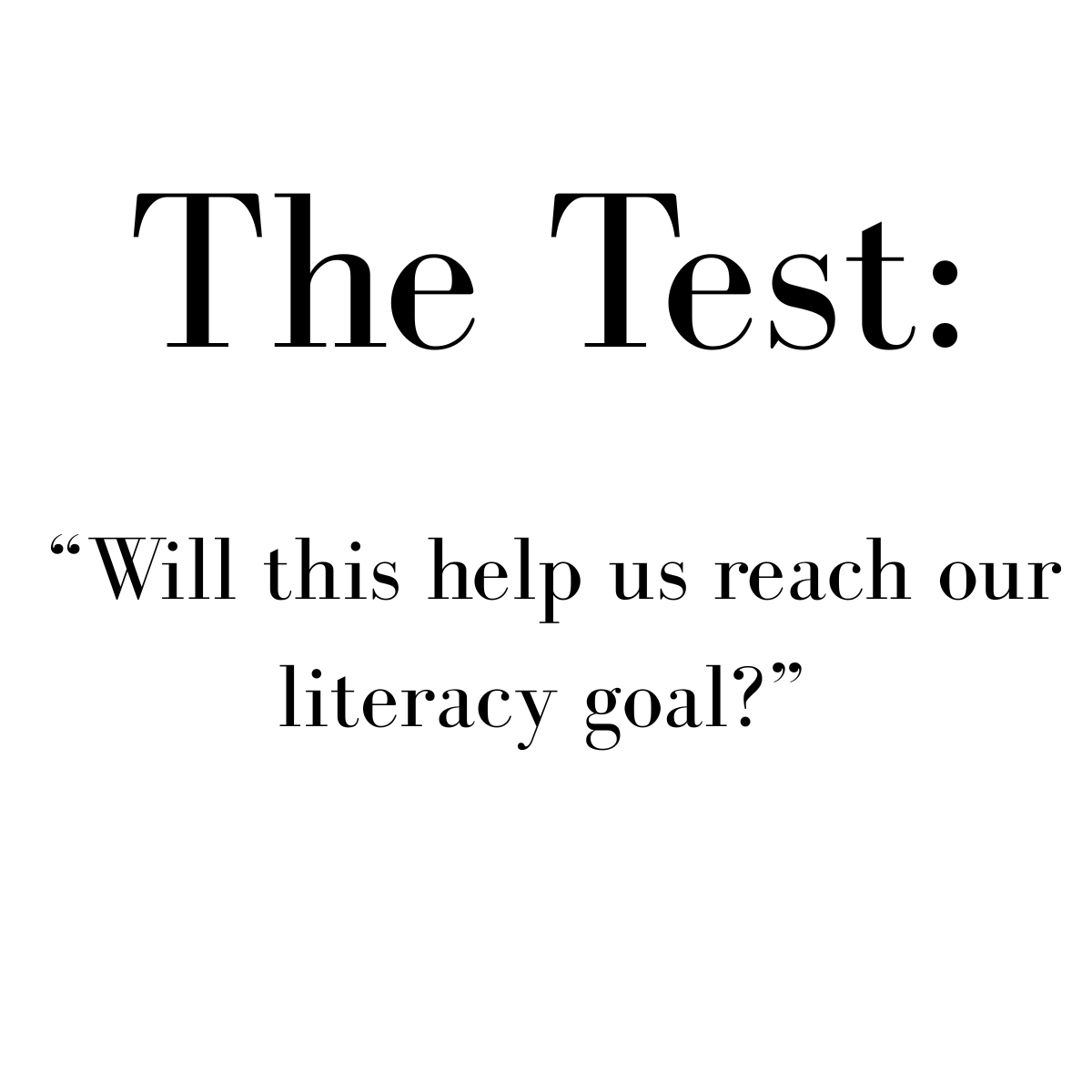
Every decision should pass this test:
“Will ________ help us reach our goal?”
This applies to:
Instructional practices and decisions
Assessments and Data-driven instruction
Professional development
Scheduling and Academic Minutes
Resource allocation
If the answer is “No, this doesn’t help,” or even “Not really or kind of,” it’s a distraction. Don’t do it!
That’s where simplification happens.
How This Reduces Teacher Overwhelm
Teachers don’t need more strategies. They need clarity.
The Hedgehog Concept gives them:
A clear instructional priority
Aligned expectations across classrooms and from leadership
Consistent routines and language
Permission to focus on one thing
Instead of: “Try all of the things!!” It becomes: “Do this one thing well every day.”
That’s where confidence, and results, start to build.
What Leaders Must Do (This Can’t Break Down)
Most schools don’t fail at identifying their Hedgehog. They fail at protecting it. Protecting it requires saying no.
No to:
Add-on initiatives
Trend-driven practices
Competing priorities
And yes to:
Depth over breadth
Consistency over novelty
Effective instruction over everything else
If leadership doesn’t protect the focus, and remove barriers for teachers, the system drifts back into overwhelm.
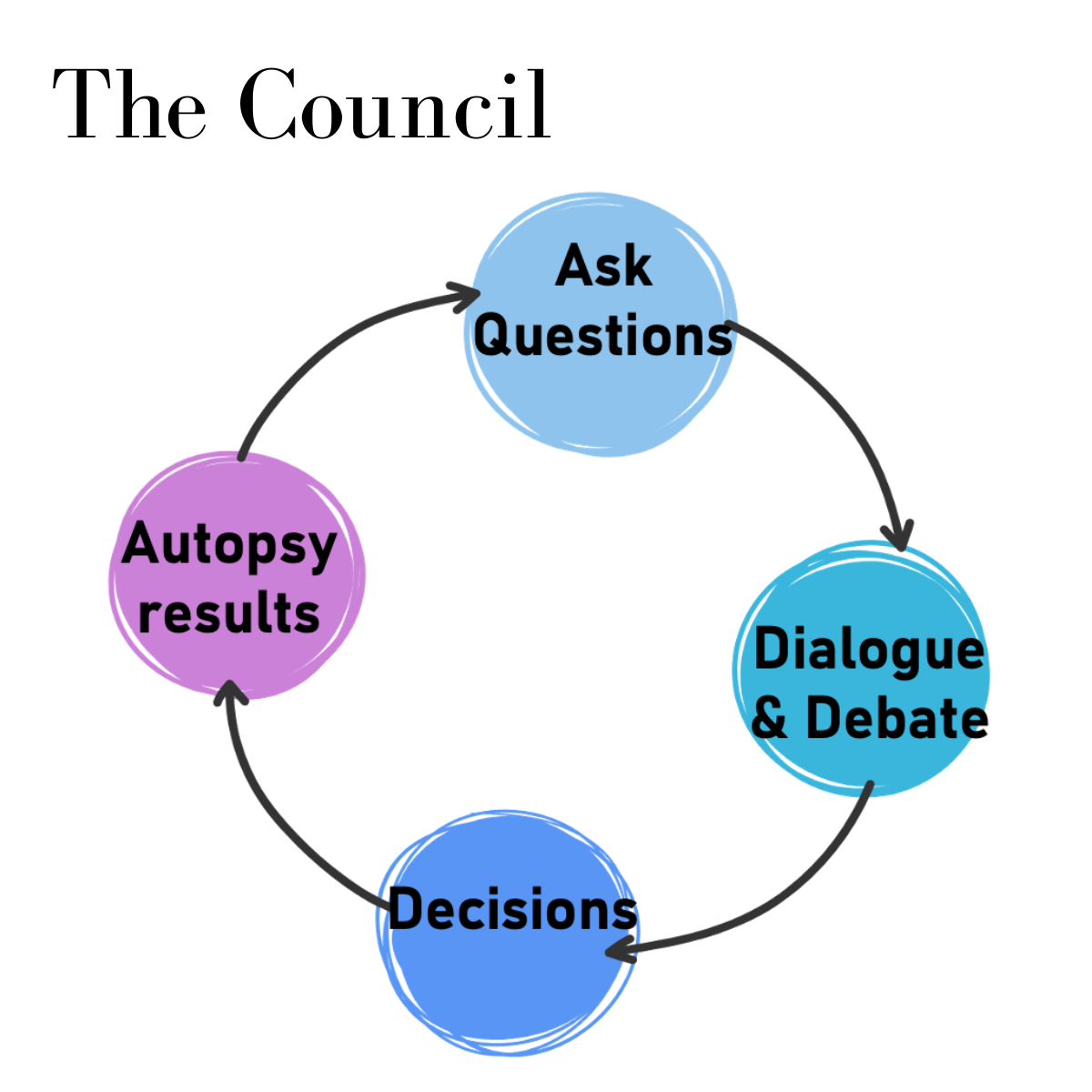
“The Council exists to surface the truth, make clear decisions, and learn quickly, so we stay focused on what matters most.”
In Good to Great, Jim Collins introduces “the Council” as a practical leadership structure that helps organizations discover and refine their Hedgehog Concept.
The Council is not a formal committee and not another meeting for the sake of meetings. It’s a small, carefully chosen group of people who engage in honest, open dialogue to help leaders make better decisions.
Think of it as:
• A thinking partner system. • A truth-telling environment. • A decision-refining engine.
The Council exists to help leadership see reality clearly (even when it’s uncomfortable), test decisions and assumptions, and refine strategies over time. Without a council, momentum can quickly fade. Collins found that effective Councils share these traits:
1. The Right People, Not Just Titles
• Not based on hierarchy. • Based on insight, credibility, and perspective. • You want people who will challenge thinking, not protect egos.
2. Open, Honest Dialogue
• Debate is encouraged. • No punishment for speaking hard truths. • The goal is understanding, not winning arguments.
3. Guided by Questions, Not Presentations
• Less reporting, more thinking. • Leaders ask: “What are we missing?” “What does the data actually say?”
4. No Authority, But Huge Influence
• The Council doesn’t make final decisions. • The admin/principal still decides. • But good leaders listen deeply and adjust.
5. Consistency Over Time
• Meets regularly. • Builds momentum. • Insights compound.
Why It Matters
Most organizations fail not because of lack of data, but because:
• People don’t feel safe to speak honestly
• Leaders surround themselves with agreement
• Decisions are made too quickly or in isolation
The Council solves that.
Final Thought
Simplicity is not about doing less.
It’s about doing what matters most…consistently, intentionally, and well.
When a school aligns around a clear literacy focus, and commits to strong Tier 1 instruction, everything else starts to work better.
That’s the power of the Hedgehog.
If you’re looking for a quick, 45–60 minute PD to use with your staff, you can find the Power Point, Guidebook, and video in the Reading Rev VIP Vault or grab it here.
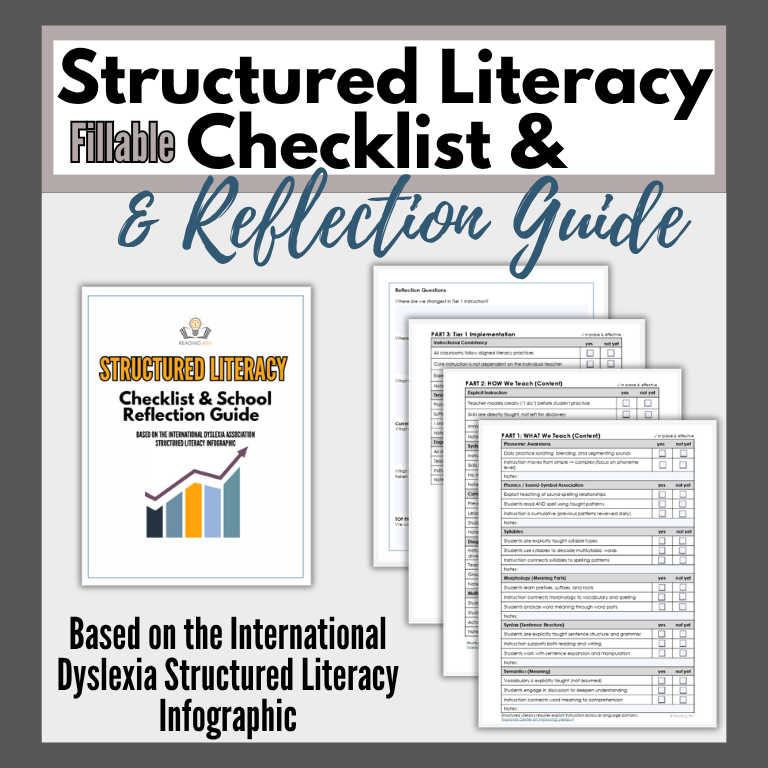
But if your school is ready to go deeper, so teachers truly understand the what and the how of structured literacy, start with the Structured Literacy Checklist & School Reflection Guide (based on the International Dyslexia’s Structured Literacy Infographic and also in VIP). Then, learn more about how our on-site, accredited professional development can help your team build clarity, strengthen alignment, and bring your literacy vision, and hedgehog concept to life.
This post may contain affiliate links. This means I may earn a small commission at no additional cost to you if you make a purchase through these links.
Berlin, I. (1953). The hedgehog and the fox: An essay on Tolstoy’s view of history. Weidenfeld & Nicolson
Collins, J. (2001). Good to great: Why some companies make the leap... and others don’t. HarperBusiness.